
Selling a House As-Is vs. Renovating in the DC Metro Area: What Is the ROI?
One of the most consequential decisions a DC Metro Area seller faces: invest in renovation before listing, or sell the home in its current condition? The answer depends on your timeline, your home's condition, and what buyers in your specific submarket are actually willing to pay for.
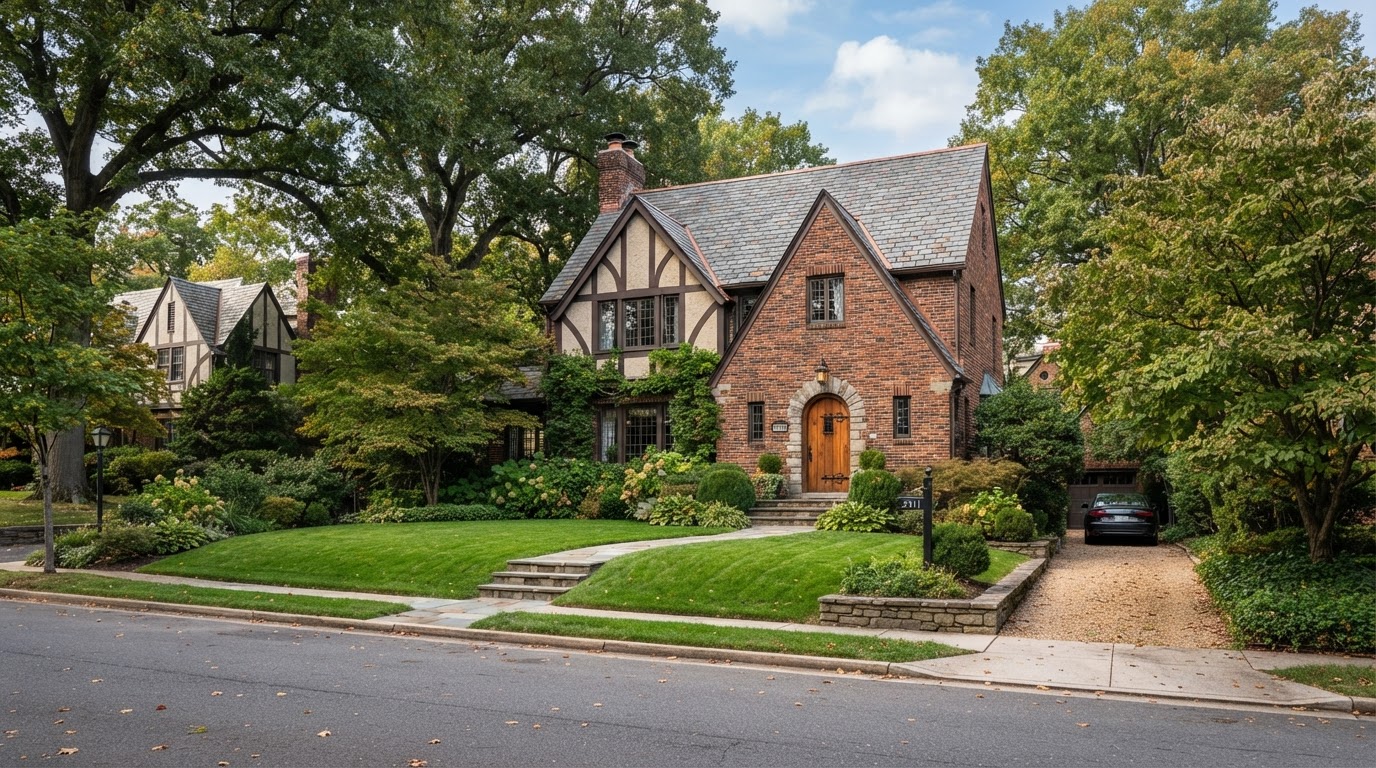
A classic Tudor-style home in a quiet suburban Maryland neighborhood, representative of DC Metro Area single-family housing stock.
There is no universal right answer here. A seller in Bethesda with a dated kitchen and six months to plan is in a completely different position than a seller in Silver Spring who inherited a property and needs to close in 30 days. The decision to renovate or sell as-is is situational, and the DC Metro Area market adds layers of nuance that generic advice often misses.
This guide walks through the real ROI data on common pre-sale renovations, the scenarios where as-is selling makes strategic sense, and how my six selling solutions map to both paths.
What "Selling As-Is" Actually Means
Selling as-is means listing the home in its current condition without making repairs or renovations before closing. Importantly, it does not mean skipping disclosures. Maryland, Virginia, and DC all require sellers to disclose known material defects. An as-is listing communicates to buyers that the seller will not be making changes, but it does not limit the buyer's right to inspect.
In practice, as-is listings attract a different buyer pool: investors, cash buyers, and households who prefer to renovate to their own taste. That buyer pool is real and active in the DC Metro Area, particularly for properties priced to reflect condition.
The key trade-off is usually this: as-is sellers typically accept a lower sale price in exchange for speed, convenience, and the elimination of renovation risk and upfront cost.
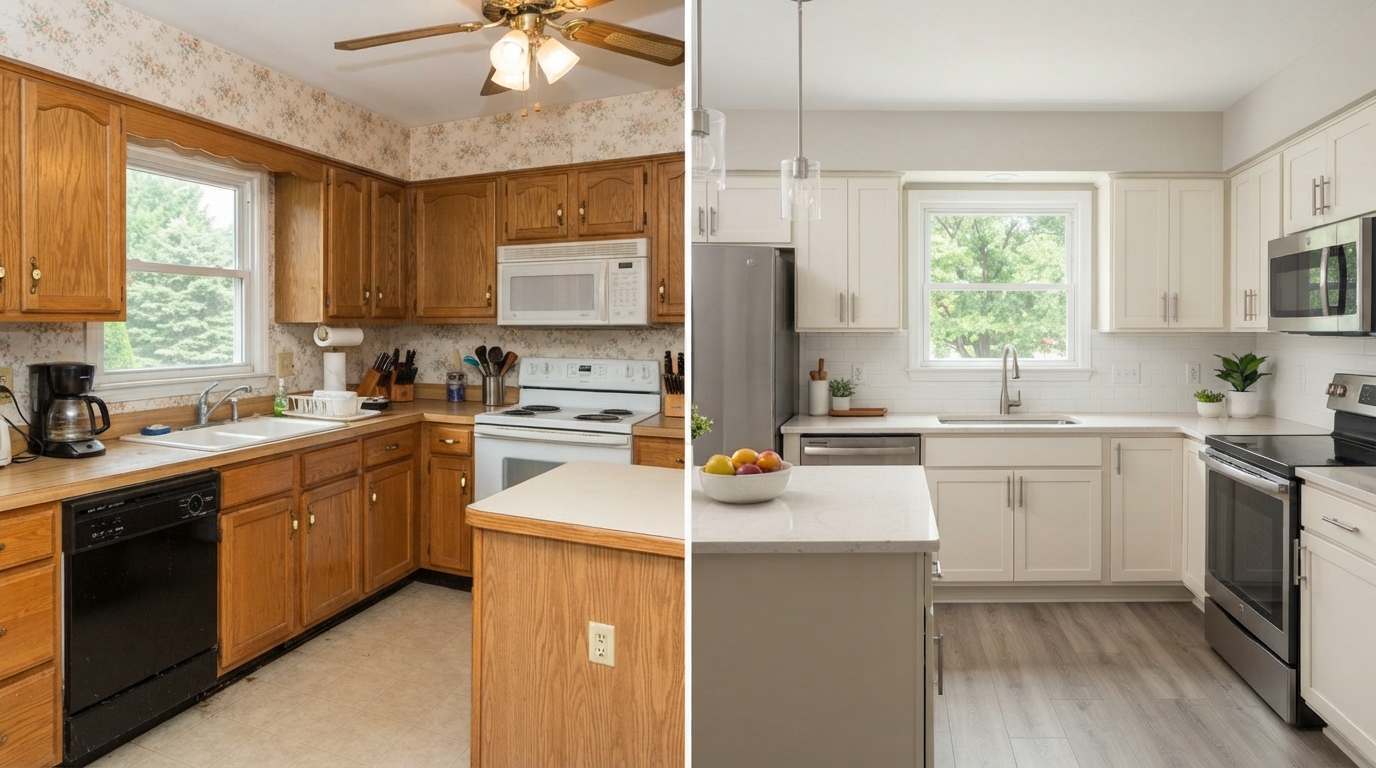
Targeted cosmetic updates (refaced cabinets, fresh hardware, neutral countertops) yield higher resale returns than expensive gut overhauls.
The Real ROI on Common Pre-Sale Renovations
The 2025 Cost vs. Value Report tracks resale return on common renovation projects nationally. It is important to note that returns in the DC Metro Area can differ from national averages, and actual recouped value depends on the specific home, neighborhood, and current market. Here is how key projects perform, with context for our local market.
Minor Kitchen Remodel (Midrange)
MEDIUM ROINationally recoups ~113%, but regional data shows closer to 75 to 80% return.
Replacing cabinet fronts, updating countertops, adding new appliances, and improving lighting typically returns more per dollar than a full gut renovation. While national averages suggest a profit, DC-area and Northern Virginia kitchen remodels typically recoup 75 to 80 percent of their cost. Still, DC Metro Area buyers respond strongly to functional, updated kitchens, making this a high-priority project for homes where the kitchen is dated but structurally sound.
Midrange Bathroom Remodel
MEDIUM ROIRecoups approximately 70 to 80% nationally.
A midrange bathroom refresh, new vanity, updated fixtures, tile, and lighting, typically returns about 70 to 80 cents per dollar spent nationally. An upscale bathroom overhaul drops to approximately 42 percent. The practical implication: do not over-renovate. A clean, functional bathroom outperforms a luxury renovation in resale math.
Hardwood Floor Refinishing
HIGH ROIRelatively low cost, strong buyer response.
In the DC Metro Area, where older homes with original hardwood floors are common in communities like Kensington, Chevy Chase, and Takoma Park, refinishing existing floors is one of the highest-ROI investments a seller can make. Cost is modest relative to the visual and buyer-perception impact.
Fresh Interior and Exterior Paint
HIGH ROIAmong the lowest cost and highest-impact updates.
Fresh neutral paint is consistently cited by agents as one of the best-returning pre-sale investments. It removes a primary "reason to say no" for buyers without requiring major capital. Exterior paint and curb-appeal improvements matter particularly in neighborhoods where buyers are comparison-shopping on first impression.
Full Kitchen or Bathroom Gut Renovation
LOW ROIHigh cost, low percentage return at resale.
Major gut renovations rarely recoup their full cost at resale. Upscale bathroom overhauls nationally recover approximately 42 cents per dollar. The issue is that buyers apply their own taste and discount renovations they would have done differently. Strategic cosmetic updates nearly always outperform comprehensive renovations on a cost-per-return basis.
When Selling As-Is Is the Right Choice
You need to close quickly
Renovation timelines are unpredictable. Contractor availability, permit delays, and material costs can extend a pre-sale renovation by weeks or months. If your timeline is compressed, an as-is path, particularly via a Cash+ Offer, eliminates this risk entirely.
The repairs are structural
Major structural issues, foundation problems, roof replacement, or significant mechanical systems rarely recoup their cost at resale. Spending $40,000 on a roof to add $25,000 in perceived value is not a winning equation. These situations often call for a price adjustment rather than a repair.
You have inherited the property
Inherited properties are among the most common as-is sales. The owner often has no emotional or financial connection to the renovation process and no knowledge of the home's maintenance history. Speed and simplicity tend to be the priority.
You do not have upfront renovation capital
Traditional renovation requires cash before closing. If that is not available, a managed renovation program (where costs are paid at closing) or an as-is sale may be the only realistic paths.
The market will absorb the condition
In high-demand DC Metro Area submarkets with low inventory, buyers compete for available properties even in imperfect condition. In these environments, a well-priced as-is listing can attract strong interest without requiring any pre-sale work.
The home needs more work than the market will reward
If a home needs $150,000 in work to compete at $800,000, but an as-is sale at $650,000 is achievable with no investment and no delay, the math often favors the as-is path when time and risk are factored in.
When Renovating Before Selling Makes Sense
Renovation pays when the gap between the home's as-is value and its renovated value is large enough to justify the cost, time, and risk. In the DC Metro Area, that gap is often largest in communities where buyers have strong preferences for move-in ready homes and where updated properties consistently attract premium offers.
The home is in a community where buyers compare heavily and updated kitchens and bathrooms drive offers. Bethesda, Chevy Chase, and Potomac are strong examples.
The needed work is cosmetic rather than structural. Paint, flooring, fixtures, and appliances have far better return ratios than mechanical systems.
You have time. Even a focused renovation takes four to eight weeks. Rushing creates cost overruns and quality issues that can hurt rather than help.
The comparable homes in your area that sold for premium prices were updated. If buyers are paying a clear premium for renovated homes in your neighborhood, that premium can justify the investment.
Avoid renovating if the neighborhood does not support the price point you need to justify costs. Over-improving a home relative to its street is a common and expensive mistake.
Avoid full gut renovations. The math rarely works in a seller's favor. Targeted updates that remove buyer objections consistently outperform comprehensive makeovers on a per-dollar basis.

Evaluating as-is cash offer options against pre-sale preparation costs helps sellers make a data-backed choice.
The Middle Path: Strategic Pre-Sale Preparation
Most sellers end up somewhere between a full renovation and a pure as-is listing. The most effective approach is usually targeted pre-sale preparation: addressing the specific issues that are most likely to cause buyers to walk away or offer less, without investing in changes that will not move the needle.
A skilled listing agent can walk through a home and identify the three to five changes that will have the highest impact on buyer perception and offer strength. This is not about a full remodel. It is about removing the reasons buyers hesitate.
Common high-impact, low-cost pre-sale improvements in the DC Metro Area include deep cleaning and decluttering, fresh paint in neutral tones, refinishing existing hardwood floors, replacing dated light fixtures, and improving curb appeal with landscaping and exterior paint.
A Third Option: Managed Pre-Sale Renovation
For sellers who want the benefit of renovation without the upfront capital or project management burden, my Renovate and Sell program offers a managed alternative. Renovations are coordinated on your behalf, with costs deferred until closing. No out-of-pocket investment is required before the home sells.
This is particularly valuable for sellers with strong equity who want to compete at the top of the market but lack the cash or bandwidth to manage a renovation independently. The program focuses on the specific high-ROI updates that buyers in the DC Metro Area respond to, not an indiscriminate upgrade of every room.
It is one of six selling solutions I provide, designed to match the right path to each seller's specific situation. See the full comparison at Choosing the Right Home Selling Strategy in the DC Metro Area.
As-Is vs. Renovate: Comparing the Trade-Offs
| Factor | Sell As-Is | Renovate Before Selling |
|---|---|---|
| Upfront cost | None | Significant (unless managed program) |
| Timeline to list | Fast, often weeks | 4 to 12 weeks or more |
| Buyer pool | Investors, cash buyers, renovation-willing | Broader, move-in-ready buyers |
| Offer strength | Typically lower | Typically higher if well-executed |
| Risk | Lower, price is known | Higher, costs and timelines can shift |
| Best for | Speed, certainty, inherited properties, structural issues | Maximizing equity, cosmetic updates, hot submarkets |
How the DC Metro Area Market Shapes This Decision
The DC Metro Area is not one market. Bethesda and Potomac attract buyers with high expectations for finished condition. Silver Spring and Kensington serve a broader range of buyers, many of whom are willing to take on projects. Takoma Park's Victorian housing stock has a loyal buyer pool that often values architectural character over surface finishes.
Micro-neighborhood demand patterns, school cluster positioning, proximity to Metro stations, and commute access all influence what buyers are willing to pay and what they expect in terms of condition. A renovation that pays off strongly in one zip code may not recoup its cost in the next.
With over 30 years of real estate experience and as a 50-plus-year resident of the DC Metro Area, I bring a thorough understanding of local nuances that helps sellers make this decision. As an A.I. Certified Agent™, I also use current market analytics to evaluate condition premiums and buyer behavior patterns in specific neighborhoods, adding precision that general market averages do not provide.
For sellers weighing a Cash+ Offer against a traditional sale or a managed renovation, the answer depends entirely on the home, the neighborhood, and the seller's goals. A brief consultation can clarify which path offers the best return on both investment and stress.
A Realtor's Take
I've worked with lots of sellers over the years, helping them navigate the decision of what level of preparation to do before selling their house. Do they renovate, or sell as-is? It's important to focus on making a mathematical and strategic choice, not an emotional one. Every house has things that need to be fixed. Some sellers assume they need to fix everything, while others think that selling as-is means giving away all their equity. The key is to find the right balance.
There are three things you need to look at: your timeline, your budget, and the specific micro-market. Certain updates and repairs that might yield a good return in Bethesda wouldn't necessarily be the best choice in another neighborhood.
Before spending any money on contractors or accepting a cash offer, a seller needs to look at the local comparable sales and think about what actually makes sense for their goals. Your move is your decision. My job is to provide the information so you can move forward with confidence.
Frequently Asked Questions
Does renovating a home before selling always increase the sale price?
Not always. The return depends on what you renovate, the quality of execution, and current buyer expectations in your specific neighborhood. Minor kitchen and bathroom updates tend to return more than full gut renovations. Cosmetic work like fresh paint, refinished floors, and updated fixtures often delivers the best ratio of cost to return.
What is the ROI on a kitchen remodel before selling in the DC Metro Area?
According to the national 2025 Cost vs. Value Report, a minor midrange kitchen remodel recouped roughly 113 percent at resale nationally. However, regional data for the DC Metro Area shows returns are typically closer to 75 to 80 percent. Full upscale kitchen overhauls typically recoup significantly less per dollar spent. Results vary by specific neighborhood and current market conditions.
What does selling as-is mean in Maryland, DC, or Virginia?
Selling as-is means the seller will not make repairs or improvements before closing. It does not waive the seller's legal obligation to disclose known material defects. Buyers retain the right to inspect the property and negotiate based on findings, though the seller has communicated upfront that they are not prepared to make changes.
What is a managed pre-sale renovation program for sellers?
A managed pre-sale renovation program coordinates renovations on behalf of the seller, with the costs deferred until closing. The seller does not need to fund the work upfront. The program focuses on high-ROI updates that buyers in the DC Metro Area respond to most, rather than a comprehensive upgrade of every room.

About Harry Moore
Realtor, A.I. Certified Agent™ | eXp Realty LLC
Harry Moore is a licensed real estate agent and A.I. Certified Agent™ with eXp Realty LLC, with 30+ years of experience helping buyers and sellers across the DC Metro Area navigate major life transitions with confidence.
Not Sure Which Path Fits Your Situation?
Take my 60-second Selling Solutions Quiz to see whether an as-is sale, a managed renovation, a cash offer, or another path fits your goals best.