
Georgia Avenue Red Line Corridor: What Buyers and Sellers Should Know
Four Metro stops. Four distinct micro-markets. One corridor that connects them all. Here is what buyers and sellers need to know before searching along Georgia Avenue and the Red Line.
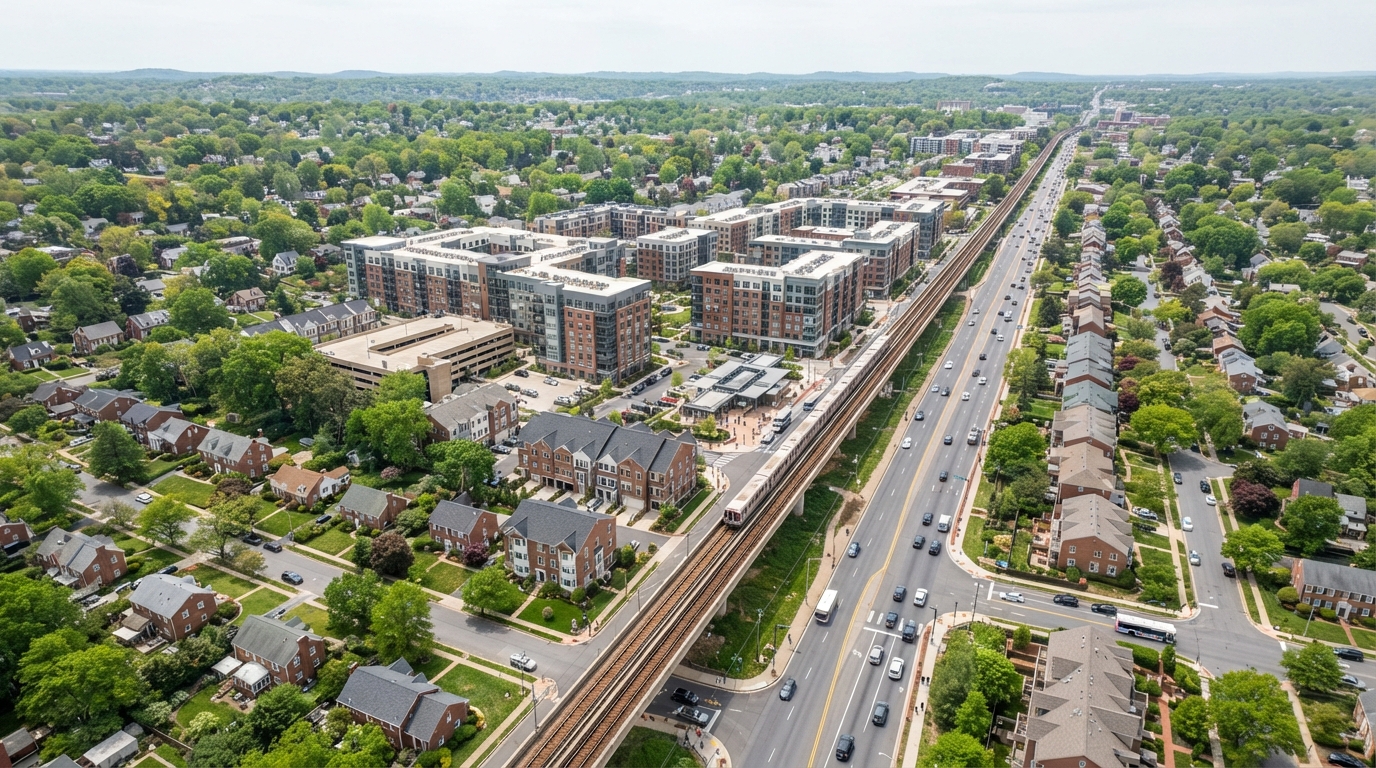
Georgia Avenue connects four Red Line Metro stations, each anchoring a distinct residential micro-market.
Georgia Avenue is the connective spine of four communities along the Red Line: Downtown Silver Spring, Forest Glen, Wheaton, and Glenmont. From a transit map, they look like stops on the same line. From the ground, they are four different markets with different housing stock, different price behavior, and different lifestyles. Buyers and sellers need to understand what makes each one distinct.
I have been working this corridor for over 30 years, and I still own rental property in downtown Silver Spring. I have watched each of these neighborhoods evolve in its own direction. The purpose of this guide is to give you the corridor-level picture in one place, then point you to the stop-specific depth you need depending on where you are actually searching. For the full Downtown Silver Spring breakdown, start with the Downtown Silver Spring neighborhood guide. Dedicated guides for Wheaton, Forest Glen, and Glenmont are forthcoming.
What Varies Stop to Stop
The four stops along this corridor share Red Line access, but almost everything else shifts as you move north.
Housing type mix. Downtown Silver Spring is condo and co-op dominant, with a smaller slice of fee simple houses. Forest Glen is almost entirely mid-century ranchers and split-levels. Wheaton is house-dominant with a sprinkling of condos near the Metro. Glenmont is predominantly single-family homes with solid value relative to the Metro access. The housing type you want determines which stop is even relevant to your search before you factor in price.
Commute character. All four stations connect to the same Red Line, but the commute experience differs. Silver Spring is the first stop heading north from DC, with the shortest ride to downtown and the added benefit of MARC Brunswick Line service. Forest Glen, Wheaton, and Glenmont each add a few minutes. The difference is modest in raw time, but it compounds when you factor in parking, bus connections, and walk-up distance.
Walkability. Downtown Silver Spring has the most walkable commercial core on the corridor, with restaurants, retail, and entertainment within a short walk of the station. Wheaton has a locally-oriented commercial district. Forest Glen and Glenmont are more residential, with fewer walkable amenities directly at the station.
Price behavior. House prices and condo prices do not move in the same direction or at the same rate across these four stops. The relationship between location and price is more nuanced than a simple distance-from-DC gradient. The pricing section below breaks down the verified figures.
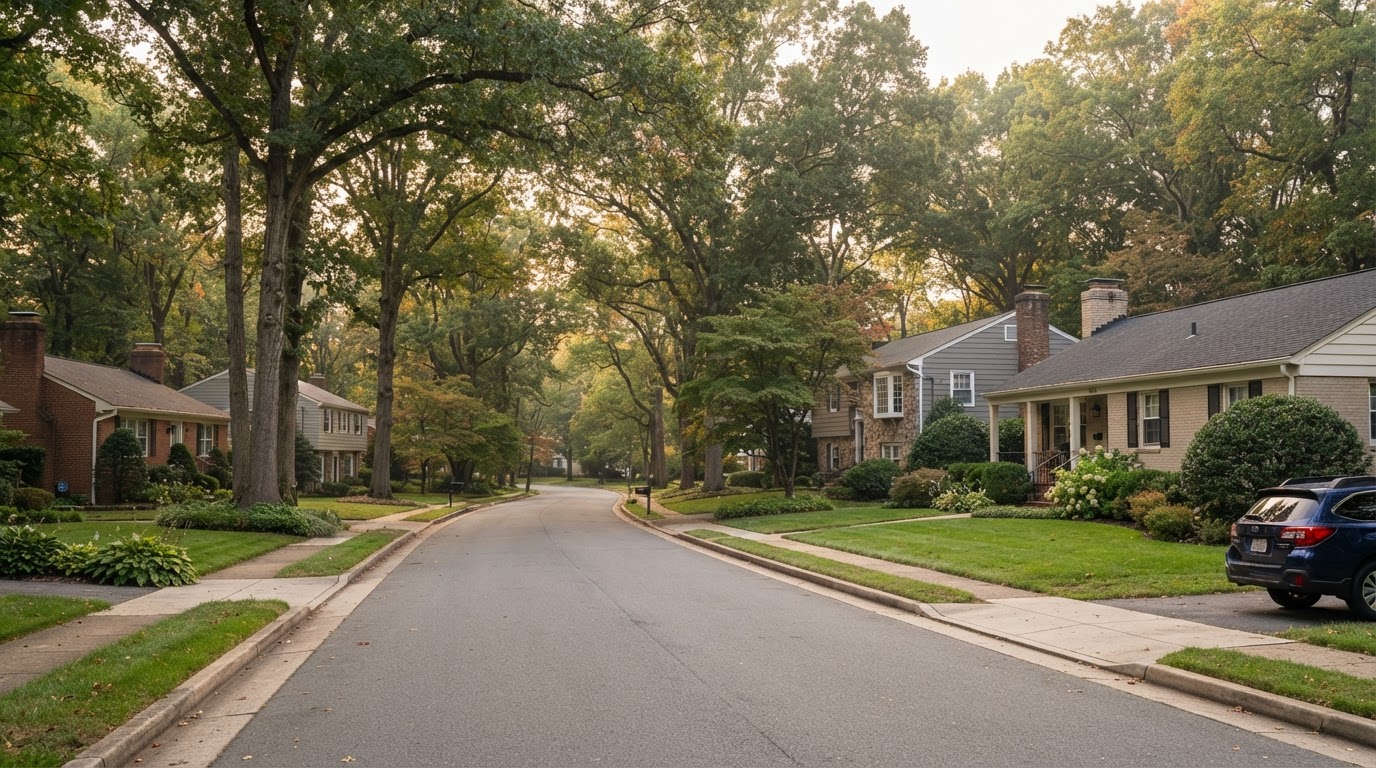
Forest Glen's housing stock is mostly mid-century ranchers and split-levels, a different market from downtown Silver Spring's condo-dominated core.
Pricing Patterns Along the Corridor
The figures below are current data as of August 2026. They are trends, not individualized estimates. Your specific block, building type, and condition will shift the number. Use these to understand the pattern, then call me for a granular read on your situation.
Houses (Fee Simple, Attached + Detached)
House prices decline steadily as you move north along the corridor:
- Downtown Silver Spring: $850,000 median
- Forest Glen: $640,500
- Wheaton: $610,000
- Glenmont: $513,000
One important note: the Downtown Silver Spring figure includes some DC-adjacent blocks within the half-mile search radius, which pulls it up. A Maryland-only comparison would be lower. Even adjusting for that, the gradient is clear. Houses get more affordable as you move away from downtown.
Condos
Condos do not follow the same steady pattern:
- Wheaton: $320,000 median
- Downtown Silver Spring: $311,000
- Glenmont: $182,500
Forest Glen condo inventory is too limited for a reliable published figure. Condo inventory near Forest Glen Metro is limited, and the few units that do come up are not enough to establish a stable median.
The fact that Wheaton condos run slightly higher than Downtown Silver Spring condos surprises some buyers. My professional read is that Downtown Silver Spring's condo mix includes a larger share of smaller, studio-style units, which may pull the median down relative to Wheaton's somewhat larger condo stock. I want to be clear: that is my read from working this market, not a proven fact. But it is consistent with what I see in the unit mix when I tour buildings on both sides of the corridor.
For deeper pricing detail on the downtown condo and house market, including HOA fee patterns and fee simple house tiers, see the Downtown Silver Spring neighborhood guide. For the Wheaton versus downtown comparison specifically, the Wheaton vs. Silver Spring breakdown covers the housing-type and budget differences in detail. Dedicated guides for Forest Glen and Glenmont are forthcoming.

All four corridor stations provide direct Red Line access to downtown DC, but the housing markets around each one are distinct.
What This Means for Buyers and Sellers
For buyers, the corridor-level picture tells you where to focus, not what to pay. If you want a condo with walkable access to restaurants and transit, Downtown Silver Spring or Wheaton are your relevant stops. If you want a house with a yard at a lower price point, Wheaton, Forest Glen, or Glenmont are where your search should concentrate. The housing type you want narrows the corridor before price does.
For sellers, the corridor pattern tells you who your buyer pool is. A house in Glenmont is competing with other houses along the corridor, not with downtown condos. A condo in Downtown Silver Spring is competing with Wheaton condos and other downtown units. Knowing where you sit in the corridor hierarchy helps you price accurately and position your listing for the right buyer.
In both cases, corridor-level figures are trends, not individualized estimates. The only number that matters for your decision is the one based on your specific property, your block, and your condition. If you are thinking about buying a home or getting a personalized, market-based valuation of your current home, I can run those numbers for you.
A Realtor's Take
I have been working the Georgia Avenue corridor for over 30 years, and I still own rental property in downtown Silver Spring. I know these four markets inside and out. The mistake I see most often is buyers treating the Red Line stops as interchangeable because they share a transit line. They are not interchangeable. A condo in Downtown Silver Spring, a rancher in Forest Glen, a house in Wheaton, and a single-family home in Glenmont are four different lifestyles at four different price points.
My advice is to start with your budget, not the housing type. You would not walk into a store without knowing how much money is in your wallet, and buying a home works the same way. Once you know what you can actually spend, the housing type and the neighborhood become much clearer. A budget in the $500,000s starts to bring Glenmont's houses into reach, while a budget closer to $600,000 to $650,000 opens up Forest Glen or Wheaton houses. If a condo fits your lifestyle better than a house, Wheaton and downtown Silver Spring condos land in a similar range in the low $300,000s, while Glenmont's condo market runs lower still. Start with the number, and the rest sorts itself out. I run neighborhood-specific comparable sales for every client before we write an offer anywhere on this corridor, because granular, neighborhood-specific data is what tells you whether a listing is priced correctly, not a corridor-wide average.
Harry Moore, REALTOR® | A.I. Certified Agent™ | Harry Moore HOME | eXp Realty | DC SP98376 · VA 0225037887 · MD 505462
Frequently Asked Questions
What neighborhoods are on the Georgia Avenue Red Line corridor?
Four communities sit along the Georgia Avenue Red Line corridor: Downtown Silver Spring, Forest Glen, Wheaton, and Glenmont. Each has its own Metro station, housing stock, and price profile. They share a transit spine but function as distinct micro-markets.
Do house prices drop the further north you go on the Red Line?
Generally yes. House medians decline steadily moving away from downtown: Downtown Silver Spring at approximately $850,000, Forest Glen at $640,500, Wheaton at $610,000, and Glenmont at $513,000. The Downtown Silver Spring figure includes some DC-adjacent blocks within the half-mile search radius, which pulls it up. Condos do not follow the same steady pattern.
Why don't condo prices follow the same pattern as houses along the corridor?
Condo medians are Wheaton at $320,000, Downtown Silver Spring at $311,000, and Glenmont at $182,500. Forest Glen's condo inventory is too limited for a reliable published figure. Downtown Silver Spring's condo mix includes smaller studio-style units, which may be one reason condo prices do not carry the same premium as houses. This is a professional read, not a proven fact.
Which Red Line stop is best for commuters to downtown DC?
All four stations provide direct Red Line access. From Silver Spring, the ride to Metro Center takes roughly 25 to 30 minutes. Each stop north adds a few minutes. The commute difference between the four stations is modest, so the decision usually comes down to housing type, price, and lifestyle rather than commute time alone.
How do I get pricing specific to my block or building type along the corridor?
Corridor-level figures are trends, not individualized estimates. Call Harry Moore at 202-362-4663 or schedule a no-pressure 15-minute call at harrymoore.com. He will run neighborhood-specific comparable sales for your exact block, building type, and timeline.

About Harry Moore
REALTOR® | A.I. Certified Agent™ | eXp Realty LLC
Harry Moore is a licensed real estate agent and A.I. Certified Agent™ with eXp Realty LLC, with 30+ years of experience helping buyers and sellers across the DC Metro Area navigate major life transitions with confidence.
Want Pricing Specific to Your Block?
Corridor-level figures are trends, not individualized estimates. If you want to know what your specific property, building type, or target block is worth right now, call me at 202-362-4663 or schedule a no-pressure 15-minute call.