
Article
Montgomery County, MD
Living in Bethesda, MD: Real Estate, Lifestyle and Local Guide
Discover an affluent, walkable, urban-suburban community offering excellent schools, world-class dining, and unmatched proximity to Washington, D.C.
Neighborhood Overview
Welcome to Bethesda
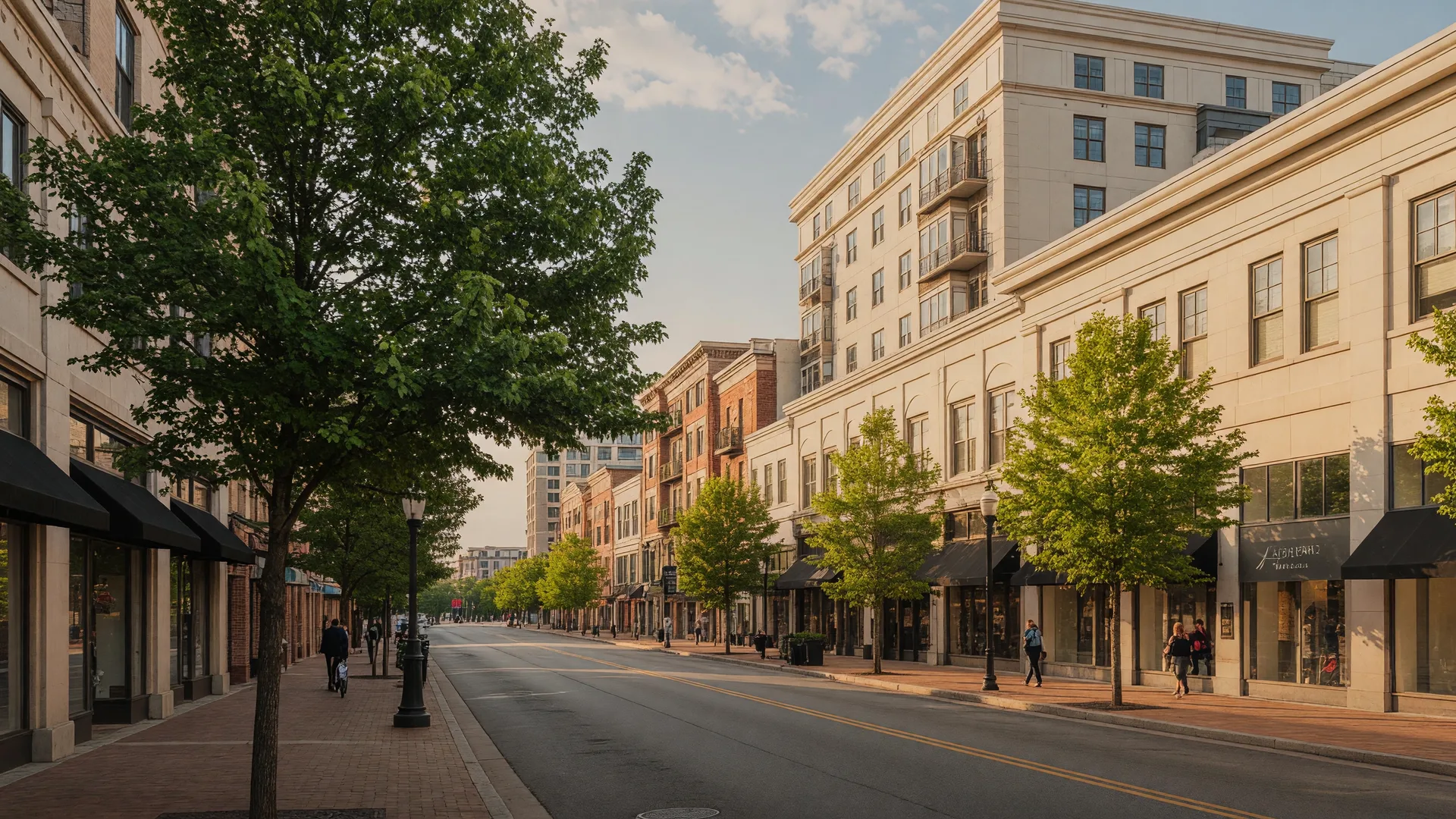
Bethesda perfectly balances the energy of a city with the comfort of the suburbs. At its heart lies a highly walkable downtown, anchored by Bethesda Row, the primary destination for high-end shopping and exceptional dining. The Woodmont Triangle also offers a complementary, vibrant dining district with a slightly more eclectic feel.
Professionals are drawn to Bethesda for its unmatched proximity to major employers like the National Institutes of Health (NIH) and Walter Reed National Military Medical Center. The addition of Marriott International's global headquarters in downtown Bethesda serves as a major employment anchor, signaling the area's continued growth and trajectory. Commuting into Washington, D.C. is effortless with immediate access to the Metro's Red Line and major commuter routes.
For households, the draw is often the top-rated Montgomery County Public Schools (MCPS). The real estate landscape is wonderfully diverse, from classic, stately colonials on quiet, tree-lined streets in neighborhoods like Edgemoor, to sleek, modern luxury condos right in the bustling downtown core.
Harry's Perspective
Harry's Take on Bethesda
“Having lived in the DC Metro Area for over 50 years, I've watched Bethesda evolve from a downtown that was a blend of light industrial and lower tier retail to one of the most dynamic and sought after communities in Maryland. The market here is robust and highly competitive, driven by professionals who want the convenience of city living without sacrificing the benefits of top-tier schools and established neighborhoods.
If you are looking to buy in Bethesda, preparation is everything. Inventory in highly desirable pockets like Bradley Hills or Edgemoor often moves quickly. You need an agent who understands the hyper-local nuances of each neighborhood and can position your offer to win in a multiple-offer scenario, while ensuring you make a sound investment.
For sellers, Bethesda homes command premium prices, but today's buyers are incredibly discerning. Proper preparation, strategic pricing, and high-impact marketing are non-negotiable. Whether you are considering a traditional sale or want to explore options like our Renovate and Sell program to maximize your equity, my goal is to provide you with clear, data-driven guidance so you can make the best decision for your future.”
Harry Moore, REALTOR | A.I. Certified Agent | Harry Moore HOME | eXp Realty | DC SP 98376 · VA 0225037887 · MD 505462
Bethesda Market Snapshot
Fee Simple
Detached homes and townhouses
Active Listings
199
currently on market
Coming Soon
11
not yet on market
Closed Sales
183
last 90 days
Median Sold Price
$1,400,000
last 90 days
Median Days on Market
13 days
median days from listing to contract
Sold/Original Price Ratio
97.7%
median sold vs original list price
Condos and Co-ops
Active Listings
106
currently on market
Coming Soon
2
not yet on market
Closed Sales
61
last 90 days
Median Sold Price
$330,000
last 90 days
Median Days on Market
53 days
median days from listing to contract
Sold/Original Price Ratio
96.3%
median sold vs original list price
Source: Bright MLS Statistics Sheets, data pulled October 8, 2026. Bethesda (20814, 20816, 20817), residential properties, split by ownership interest.
I like to break this snapshot into its two parts, because Bethesda's two ownership types are behaving very differently right now, and the right strategy depends on which one you are shopping in.
The fee simple market
The Bethesda fee simple market, which covers detached homes and townhouses, is running hot. With 183 closed sales over the last 90 days against 199 active listings, inventory is turning over steadily, and a median sold price of $1.4 million puts this squarely among the most expensive markets in Montgomery County. Homes are selling at 97.7 percent of their original asking price in a median of just 13 days on market, so in this segment the seller generally holds the stronger hand, and a well-priced, well-presented home is what stands out. For buyers, that means being ready to move when the right property comes along.
The condo and co-op market
The condo and co-op market tells a different story, and it is a good one if you are a buyer. The median sold price of $330,000 is a fraction of the fee simple median, which is what makes Bethesda condos the practical on-ramp to this neighborhood for many people. With 106 active listings and a median 53 days on market, buyers have real choices and more time to compare, and sales at 96.3 percent of asking price leave a little more room for negotiation. Between the two segments, Bethesda really does offer two distinct markets under one name, and knowing which one you are shopping in matters a lot.
Home Search
Search Homes in the DC Metro
Housing Stock
Types of Homes in Bethesda
Bethesda's inventory runs from studio condos a few blocks from the Metro to stately colonials and new builds in its most established neighborhoods. Most buyers land between those extremes, on a classic colonial or a modern condo close to the downtown core.
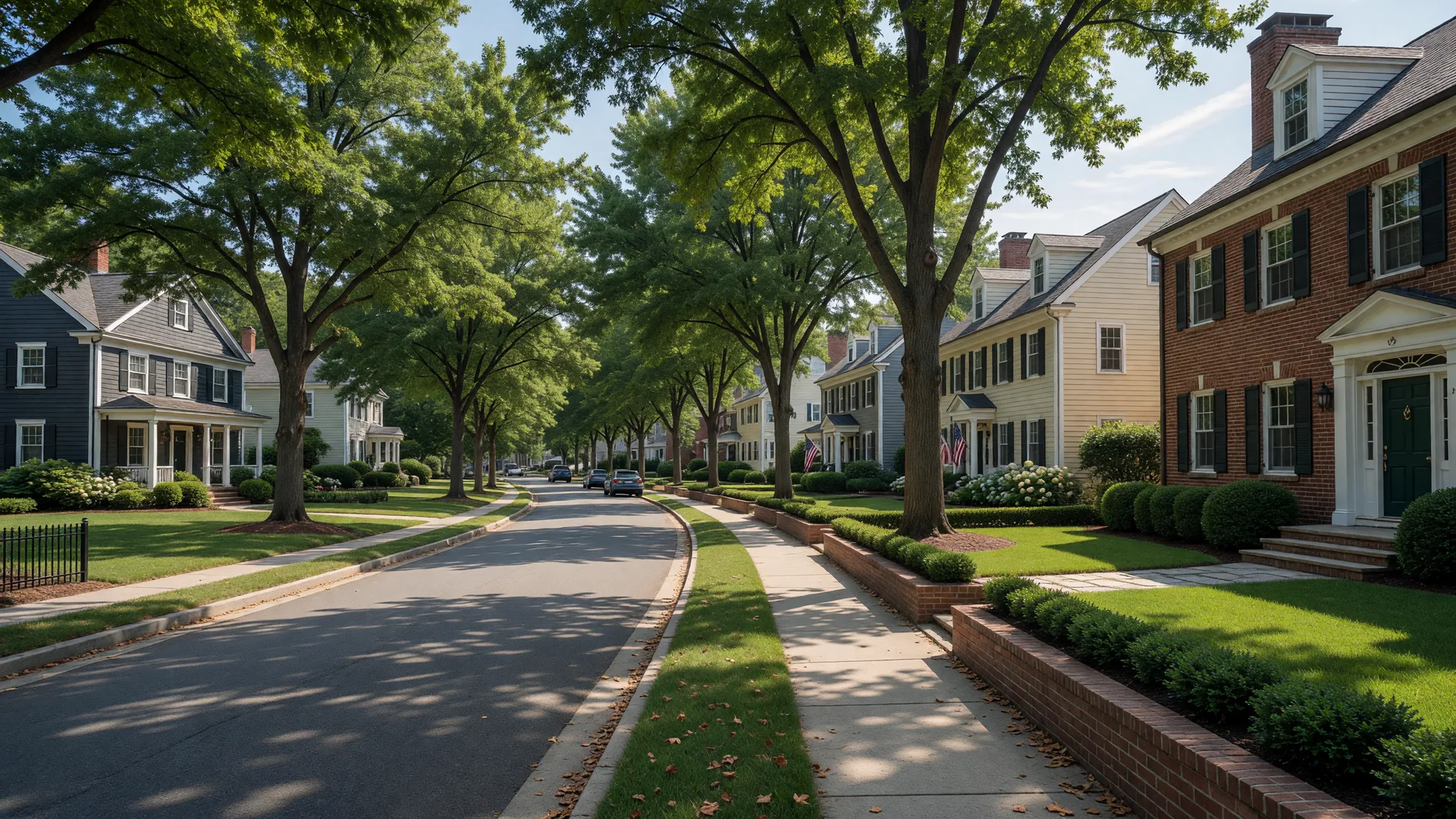
Colonials & Single-Family Homes
The dominant style in established neighborhoods like Edgemoor and Bradley Hills. Classic, stately architecture on quiet, tree-lined streets close to downtown.
Price Range
$1M to $6M+
Townhomes
A strong middle option for buyers who want downtown proximity without a full single-family price tag. Concentrated near the downtown core and Woodmont Triangle.
Price Range
$700K to $1.8M
Condos
Modern high-rise and boutique buildings concentrated in the walkable downtown core, many within steps of Bethesda Row and the Metro, plus a few older buildings downtown with more attainable entry prices.
Price Range
$275K to $2.5M+
New Construction
Infill development and teardown-rebuilds continue in established neighborhoods close to downtown, offering modern finishes in Bethesda's most established addresses.
Price Range
$1.5M to $4M+
Explore Bethesda
Explore Bethesda.
Five things that make Bethesda one of the DC Metro Area's most sought-after communities.
01
Parks, Trails, and Outdoor Spaces

Capital Crescent Trail
A paved rail-trail running from Bethesda through Chevy Chase toward Georgetown, popular with runners, cyclists, and commuters. One of the most heavily used recreational assets in the immediate downtown area.
Rock Creek Park (nearby access)
Bethesda sits close to Rock Creek Park's extensive trail system, offering wooded hiking and biking routes just minutes from the downtown core.
Norwood Local Park
A neighborhood park offering green space, playgrounds, and athletic fields for residents in Bethesda's established residential pockets.
02
Dining and Coffee
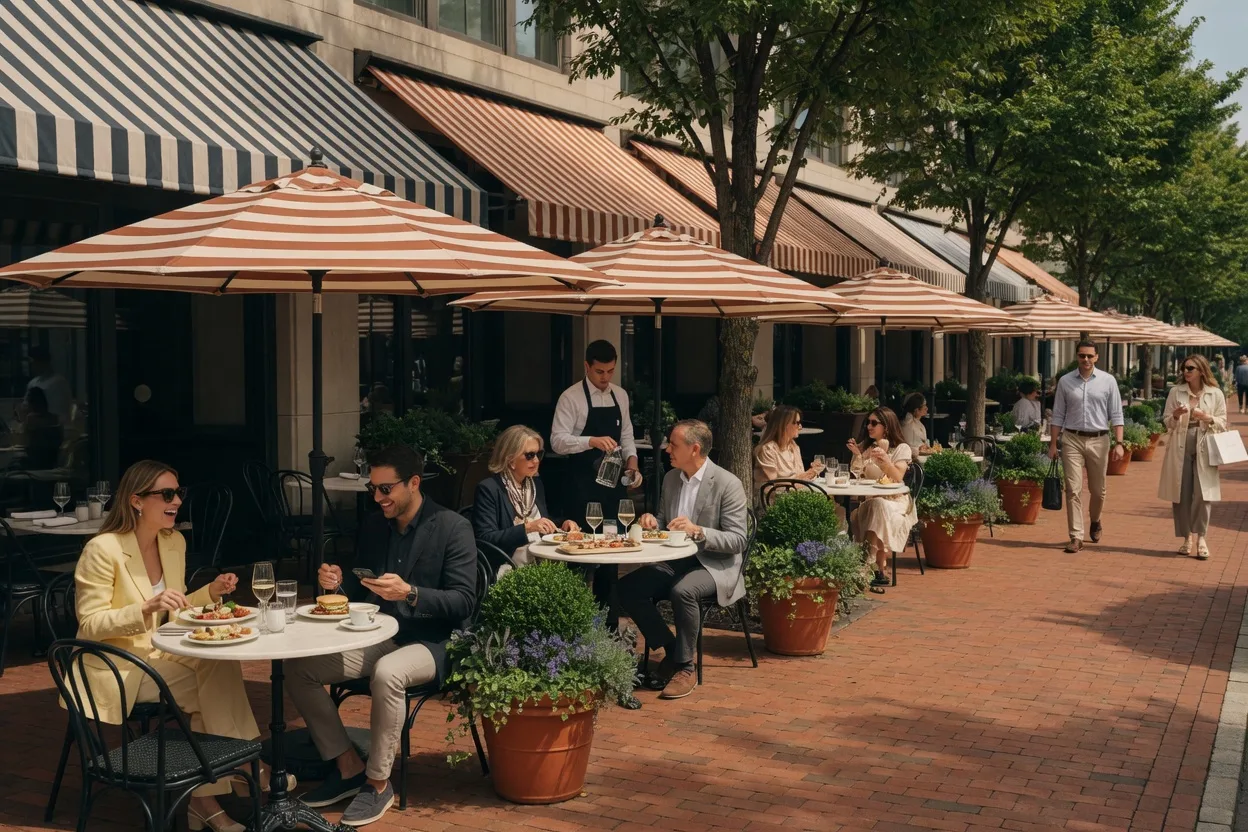
Bethesda Row
The heart of downtown dining and shopping, with a dense concentration of upscale restaurants, boutiques, and a walkable streetscape that anchors the entire downtown experience.
Woodmont Triangle
A more eclectic dining district just off the main downtown core, known for a diverse mix of independent restaurants and a livelier evening scene.
Downtown Bethesda's coffee scene
A dense cluster of local and national coffee shops throughout the walkable downtown, reflecting the area's daytime office population and weekend foot traffic.
03
Major Employers Near Bethesda
This section is why the Bethesda market holds up. Understand the employment base and the buyer demand makes more sense.
National Institutes of Health (NIH)
One of the largest employers in the immediate area, drawing researchers, physicians, and administrative staff who frequently choose Bethesda for its proximity.
Walter Reed National Military Medical Center
A major medical and military employment anchor located directly in Bethesda, drawing military, medical, and research professionals to the surrounding neighborhoods.
Marriott International
Global headquarters located in downtown Bethesda, a major private-sector employment anchor and signal of the area's continued growth.
Federal and biotech corridor
Bethesda's proximity to the broader I-270 biotech and federal employment corridor keeps demand consistent from relocating professionals.
04
Arts and Community Life
A designated arts district, an arthouse cinema, and family theater keep downtown Bethesda lively well beyond office hours.
Bethesda Row Cinema
An arthouse and independent film theater located in the heart of downtown Bethesda, a cultural anchor for the walkable core.
Imagination Stage
A theater and arts education organization based in downtown Bethesda, offering performances and classes for families and children.
Bethesda Arts & Entertainment District
A designated state arts district encompassing much of downtown Bethesda, supporting galleries, public art, and cultural programming year-round.
05
Transit and Commuting
The Red Line is the headline, the Capital Crescent Trail is the local secret, and the car remains a practical option for many commutes.
Metro Red Line
Bethesda and Medical Center stations provide direct rail access into downtown DC in roughly 25 to 35 minutes.
Capital Crescent Trail commuting
Used by a meaningful share of residents for bike commuting into DC and neighboring Chevy Chase and Georgetown.
Major commuter routes
Wisconsin Avenue and the Capital Beltway (I-495) provide direct driving access for residents commuting by car.
Buying
How to Buy a Home in Bethesda
01
Get Pre-Approved Before You Tour
Bethesda's market moves fast, especially in desirable pockets like Edgemoor and Bradley Hills. Sellers expect a pre-approval letter before confirming many showings.
02
Know the Neighborhoods Before You Search
Bethesda isn't one market. Downtown condos, Edgemoor colonials, and Woodmont Triangle townhomes are three different lifestyles and price points. I start every Bethesda buyer conversation with a neighborhood fit assessment.
03
Act on Hyperlocal Data
Countywide statistics can be misleading in a market as varied as Bethesda. I run neighborhood-specific comparable sales before any offer so you know exactly what a home is worth.
Selling
Selling Your Bethesda Home
Bethesda sellers benefit from a deep, consistent buyer pool of relocating professionals, NIH and Walter Reed employees, and move-up buyers who know the market well. I bring professional staging consultation, architectural photography, targeted digital marketing, and AI-powered outreach to buyers already researching Bethesda specifically.
Services included:
- Professional staging consultation*
- Architectural and lifestyle photography
- 3D virtual tour
- Video walkthrough tours*
- AI-powered buyer targeting
- MLS/Zillow/Realtor.com syndication
- Social media ad campaigns
- Targeted outreach to relocation buyers in the DC Metro Area
- Cash+ Offer option for sellers who want certainty over timeline
*Available for qualified properties
From the Journal
Explore More About Bethesda
In-depth articles for buyers, sellers, and anyone researching Bethesda real estate.
Article
Selling Your Bethesda Home in 2026: What to Expect
Coming soonArticle
Buying Near NIH and Walter Reed: Bethesda Real Estate for Federal and Medical Professionals
Coming soonArticle
Bethesda Real Estate Market Report: 2026
Coming soonNearby Communities
Explore More Montgomery County Communities
Montgomery County
Chevy Chase
A village of leafy, established neighborhoods along the DC line, served by the top-rated Bethesda-Chevy Chase school clusters and the Red Line. A premium address that pairs a small-town feel with the District next door.
Read the guideMontgomery County
Rockville
Montgomery County's county seat, with a real downtown, two Red Line stations, King Farm and Twinbrook, and a wide price band that gives buyers room to move up within the county.
Read the guideMontgomery County
Potomac
The estate country of Montgomery County: one-acre lots and luxury homes in river neighborhoods, with Churchill schools and the C&O Canal nearby. Quiet, private, and in steady demand.
Read the guideFAQ
Frequently Asked Questions.
Is Bethesda a good place to live?
Yes, Bethesda is consistently ranked as one of the best places to live in Maryland and the entire country. It offers a high quality of life, excellent public schools, a thriving dining and arts scene, and incredibly safe neighborhoods, making it highly desirable for professionals and households alike.
What is Bethesda known for?
Bethesda is known for being an affluent, highly educated community just outside of Washington, D.C. It is home to the National Institutes of Health (NIH), Walter Reed National Military Medical Center, and a bustling downtown area featuring the Woodmont Triangle, renowned for its diverse restaurants and boutiques.
What types of homes are in Bethesda?
The real estate in Bethesda is diverse. You will find sprawling historic colonials and mid-century modern homes in established, tree-lined neighborhoods, as well as brand-new luxury construction and high-end condominium buildings concentrated near the downtown core and Metro stations.
How is the commute from Bethesda to DC?
The commute is excellent. Bethesda is served by the Metro's Red Line, which provides a direct, quick ride into downtown D.C. For drivers, major routes like Wisconsin Avenue, Connecticut Avenue, and the Capital Beltway (I-495) make commuting highly convenient.
What are the schools like in Bethesda?
Bethesda is served by Montgomery County Public Schools (MCPS), which are highly rated and nationally recognized for academic excellence. The area is also home to several prestigious private schools, making it a top destination for households prioritizing education.
Is Bethesda a good place to buy real estate right now?
Bethesda real estate has historically been a very strong and stable investment due to the constant demand driven by nearby federal agencies, medical centers, and top schools. While prices are premium, properties here tend to hold their value exceptionally well regardless of broader market fluctuations.
Get Started
Ready to Buy or Sell in Bethesda?
Harry Moore is an A.I. Certified Agent with eXp Realty serving Bethesda and the DC Metro Area. Bethesda's most desirable pockets move on short timelines. Whether you are buying or selling, a conversation now costs nothing and puts you in position to act when you are ready.
301-960-7194 harry@harrymoore.com eXp Realty Office: 833-335-7433 DC SP 98376 · VA 0225037887 · MD 505462